Prison Reimagined
An exhibition-based, community advocacy initiative featuring artwork & writing by incarcerated artists critiquing the US Justice System.
Prison Reimagined: Independence 250
NOW ACCEPTING SUBMISSONS!
*
Prison Reimagined: Independence 250 (PR250) is an exhibition based project that brings together the art and writing of incarcerated and formerly incarcerated people to commemorate the 250th anniversary of the signing of the Declaration of Independence and the founding of the United States of America.
*

To Those Who Have Been Impacted By Harm
A Message from the Committee of Incarcerated Artists and Writers:Many of the incarcerated people involved with this project have caused harm to others, and we acknowledge our actions and the harm we have caused.While advocating for an immediate shift towards decarceration in American prisons, we also firmly advocate for a pathway to healing for those who have suffered harm. This path should prioritize the well-being and empowerment of those affected, surpassing the limitations of the current systems’ established procedures.[We seek] to create responses to violence that do what criminal punishment systems fail to do: build support and more safety for the person harmed, figure out how the broader context was set up for this harm to happen, and how the context can be changed so this harm is less likely to happen again.Transformative justice…is not grounded in punitive justice, and it actually requires us to challenge our punitive impulses, while prioritizing healing, repair, and accountability.We would immediately focus on addressing the harms perpetrated, centering on the concerns and experiences of the person who was harmed. Next, we would focus on the person responsible for the harm – but without disregarding their humanity. This means we have to acknowledge the reality that often it is hurt people who hurt other people. Understanding that harm originates from situations dominated by stress, scarcity, and oppression, one way to prevent violence is to make sure that people have support to get the things they need. We must also create a culture that enables people to actually take accountability for violence and harm.- Mariame Kaba and Kelly Hayes, We Do This ‘Till We Free Us
The Prison Reimagined Story
My name is Caddell Kivett and I'm writing to you from inside Franklin Correctional, the prison where I live in Central North Carolina.In the work that I do, writing and organizing from prison, I have a few specific objectives: I work to amplify the voices of people behind bars and to build bridges between incarcerated and free communities. Sharing our stories can help the free public better understand the carceral experience. When we recognize the people behind bars, only then can we acknowledge and connect in our shared humanity.I work to help people understand the history of mass incarceration so we can find a better way to address crime, harm, and violence. Simply locking people away with impossibly-long prison sentences and little rehabilitation is not making us safer, stronger, or better as a nation. We could - and should - do better for victims who are harmed, for those who commit harm, and for the communities we live in.*In January 2021, I was sitting in my prison cell — we had just watched President Biden's inauguration — and, surrounded by artists at the prison where I lived, I had an improbable idea: Let's have incarcerated artists draw portraits of our presidents, then invite those subjects to see what we had drawn. This, I knew, if staged in proper context would make for powerful commentary on mass incarceration and criminal punishment in America. We would include written works by incarcerated writers and extend the invitation to people serving time all across the country.With just this idea, and unsure where to start, I thought about connections I had made while working for The Nash News, a quarterly publication conceived, designed and written entirely by incarcerated men at Nash Correctional Institution. In seven years, I had worked my way up from book reviewer to reporter, and then to assistant editor. In 2019 we published an article about Justice Arts Coalition and the outreach work they do with incarcerated artists. So I drafted a letter to Wendy Jason, founder of Justice Arts, and we began to exchange ideas about how to launch PRP3. They assigned an intern to work with me and we began to explore potential venues in the nation's capital, and we faced many hurdles and challenges, eventually losing momentum to a second wave of Covid-19.Still, I kept pushing forward.In the early months of 2022, Janie Ritter came onboard through the Justice Arts Coalition, and with renewed motivation we continued our search for a venue partner. One location on our radar was President Lincoln's Cottage — they had expressed a prior interest, and so a conference call was scheduled. After that successful conversation, and with the enthusiasm and support of the whole team at President Lincoln's Cottage, we secured a venue.*From the beginning, I looked to include as many incarcerated people in as many ways possible — and to have them fully centered in the project.Our process was as follows:
We distributed calls for submissions to prisons throughout the country, and at my camp I assembled a group of experienced artists and writers to jury and curate the project. This panel became the Committee of Incarcerated Artists and Writers. We received entries from 13 states, and once they arrived at the Justice Arts office, Janie made digital copies, then sent packets of the art and writing to each committee member at my prison. The committee met twice weekly and we discussed every submission at length. Committee members graded each work based on a set of parameters that ranged from: interpretation of the project theme and creativity, to overall quality and artistic application. Grades were averaged and tallied to determine what would make the show. We selected 23 visual and 23 written works, to represent 46 presidents.When the committee disagreed — as we often did — we held a discussion, took a vote, and inevitably came to what was best for the project. The entire selection and curating process, over the course of two months, was empowering, illuminating, transformative and restorative for the men involved.*I encourage everyone to reconsider any default assumptions they have about our criminal punishment system, how it functions, and the people who work and live within. And to think about ways you can get involved in these conversations.As Prison Reimagined moves forward at other venues and with new projects, we'll use what we've learned as a model for future endeavors. I didn't set out to create a first-of-its-kind exhibition. My goal was to feature the work of incarcerated artists in a prominent, public-facing museum, and to utilize the platform to educate people about mass incarceration. The goal is to affect the attitudes, and ultimately the policies that determine how we address crime in our country. Through the collaborative work of Justice Arts Coalition, President Lincoln's Cottage, Workhouse Arts Center, and the artists and writers from across the country, we have and will continue to make strides in this work.Let me leave you with this:
For incarcerated artists to not only show at a national historic site or museum, but to showcase our work in what was once the summer retreat and a place to think for one of our most consequential presidents; to feature a portrait of our first Black president, which was displayed in the room where President Lincoln drafted the Emancipation Proclamation, made by a Black artist who remains behind bars – these things all represent a deeper, full-circle form of inclusion with more weight and significance than I can easily express.But this work remains, unfinished.Thank you.
Prison Reimagined Team
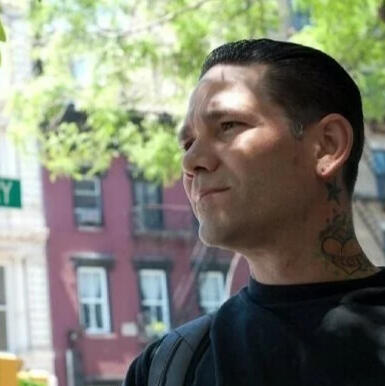
Caddell "Monty" Kivett (he/him)
Curator, Artistic Director
Monty is a former editor and writer for The Nash News. He studied Media at the University of North Carolina-Greensboro. He is the curator and artistic director for Prison Reimagined, and has served 15 years of an 80-year-minimum sentence.
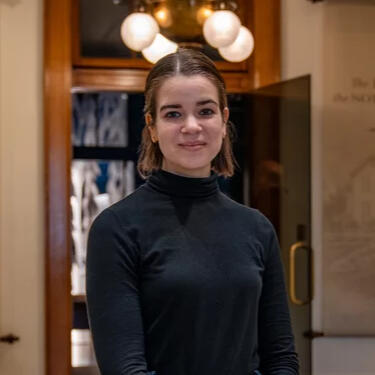
Janie Ritter (she/her)
Project Manager (volunteer)
Born and raised in Virginia, Janie’s work centers on making museum spaces accessible to all persons, regardless of background or artistic experience. In addition to her work with Prison Reimagined, she serves as the Registrar at Howard University Gallery of Art.
Prison Reimagined: Presidential Portrait Project
PRP3 at President Lincoln's Cottage
(1/5-2/19 2024)
With support from the Art for Justice Fund
PRP3 at Workhouse Arts Center
(1/18-3/12 2025)
PRP3 at Wistariahurst Museum
(4/8-7/1 2025)
With support from the City of Holyoke, Mass Cultural Council, and the Wistariahurst Foundation
PRP3 at Indy Art Center
(8/2025-10/25)
Committee of Incarcerated Artists and Writers
The Committee of Incarcerated Artists and Writers (CIAW) is a panel of diverse men who have utilized their time behind bars to transform their lives. Through their talents—creating original art, playwriting for the stage, and writing fiction and non-fiction for publication—these men continue to break the stereotype of what it means to be an incarcerated human being. At the time of PRP3's inception, the men of the CIAW were all housed at Nash Correctional Institution (NCI), a North Carolina prison, but may live at different camps now.
MICHAEL SLEEMAN
is an artist who works in pastel, acrylic, wood, and metal. He is president of the Nash Art Club, teaches realism to Intermediate graphite students, and organizes meetings for Advanced students.*
KALAB LACKEY
is an artist and an Advanced member of the Nash Art Club. His work has been featured in the Mims and Gravely Art Galleries. He is a writer and photographer for The Nash News. Born and raised in Catawba County, Kalab has served 15 years of a 21-year minimum sentence.*
THELDON WILLIAMS
is an artist who works in pastel, charcoal, and graphite. As an Advanced member of the Nash Art Club, he serves as club librarian and teaches a Beginner’s Art Class. He has an associate’s degree from the International Christian College and Seminary.
BARRY MINTZ
is a self-taught artist and the art reporter for The Nash News. He is a graduate of the NCFMP who works as certified tutor and writing consultant for undergrad field ministers. His landscapes have won first-place honors at the NCI Art Show in 2019, 2022, and 2023, and have been exhibited at The Mims Gallery at NC Wesleyan. His work is referenced by Adams State University for their Art Appreciation course. Barry is serving a life sentence.*
KELVIN SMITH
is a graduate of the NCFMP. As a Graduate Assistant he serves as a peer-tutor and peer-tutor trainer. He is a writing consultant who works with undergraduate students. Kelvin has served 19 years of a life sentence.*
LARENCE PROFFITT
is a Writer and Commentator for The Nash News and has written his column “The Rub” for seven years. He has been incarcerated all of his adult life.
ALBERT RAMOS
is the author of the award winning children’s book, Gavin Discovers the Secret to Happiness. His work has appeared in the Dharma Dispatch, The Loop, and On the Wire. Albert believes justice impacted people who utilize healthy practices, such as Buddhism, positive psychology, and analytical meditation, can change their perspective and enjoy a more beneficial and positive narrative.*
JOSÉ DAVID VASQUEZ
graduated from the NCFMP, summa cum laude. His work has appeared in The Nash News. He is a writer who speaks four languages, and an editor who edits with absolute joy. José has served 9 years of a 25-year sentence.*
MARK MERCER
is a writer for The Nash News and a member of the Nash Art Club. He received a BA in Math Education from Elon University in 2009. Mark has served 14 years of a 27-year-minimum sentence.
GalleryPrison Reimagined: Presidential Portrait Project
Click artwork to read the artist's statement
(not all works have artist statements)

Honest Abe: Change is Possible
by Valentino Amaya

Standing After Shooting
by Sean Yabara

Honest Abe: What Changed?
by Richard Spence

The $5 Bill
by Dillan Letellier
Works by Bednago Harper
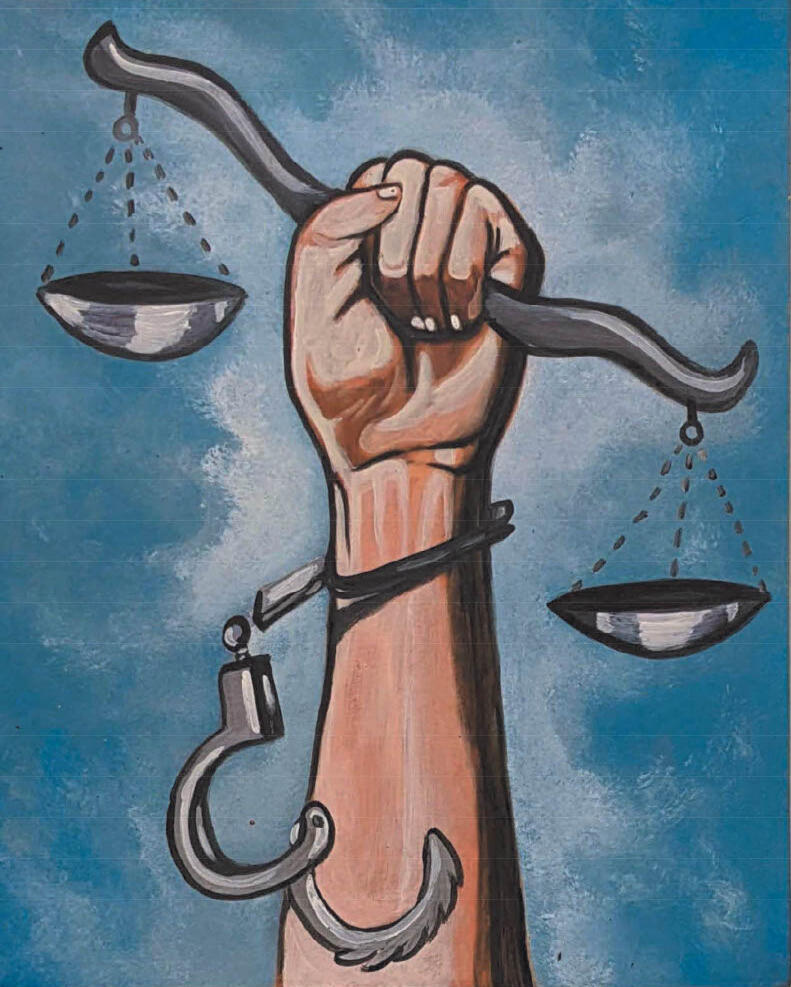
Justice
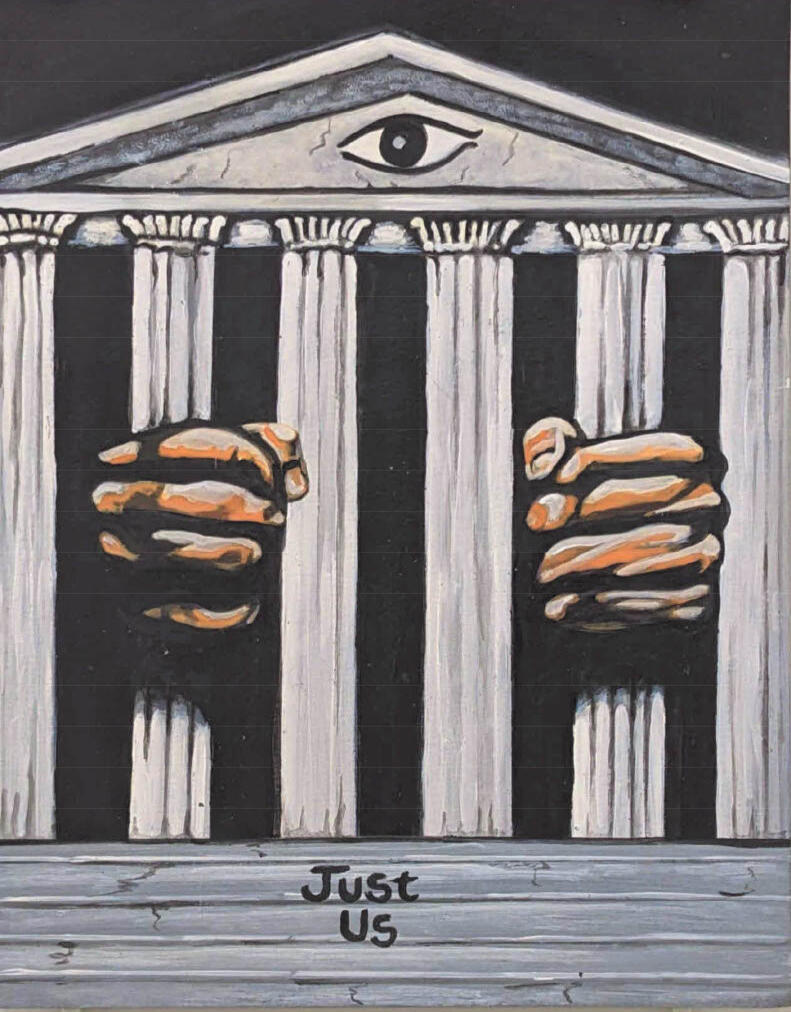
Just Us
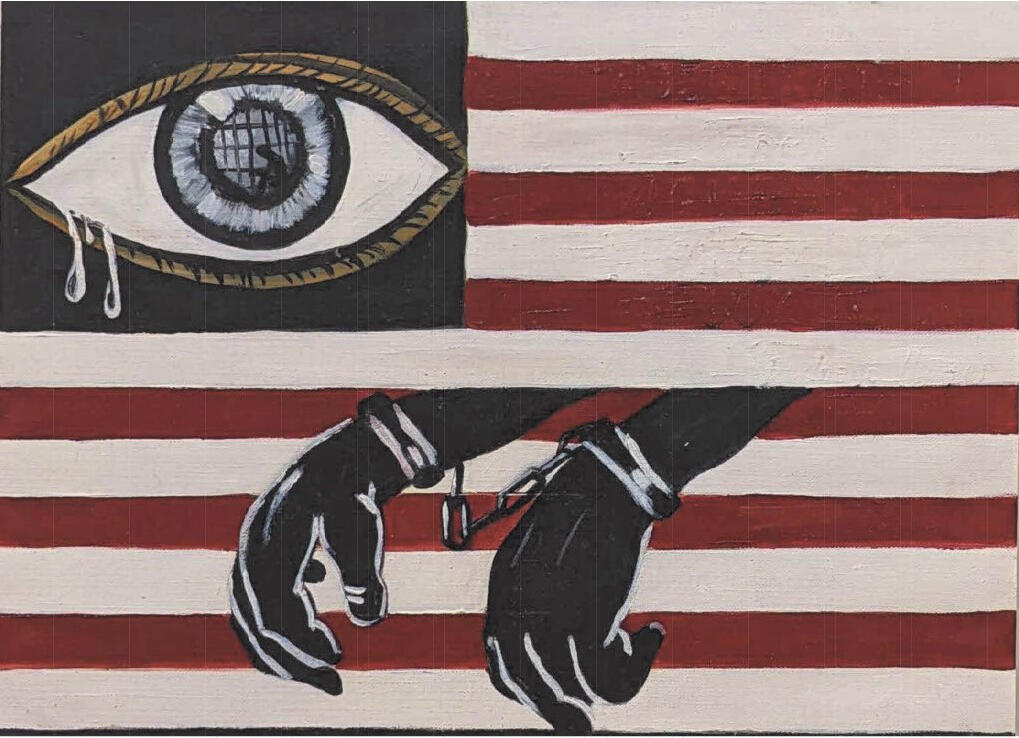
And Justice for All

Chance-Change
by Nhut Vo

Studious
by James Sepesi

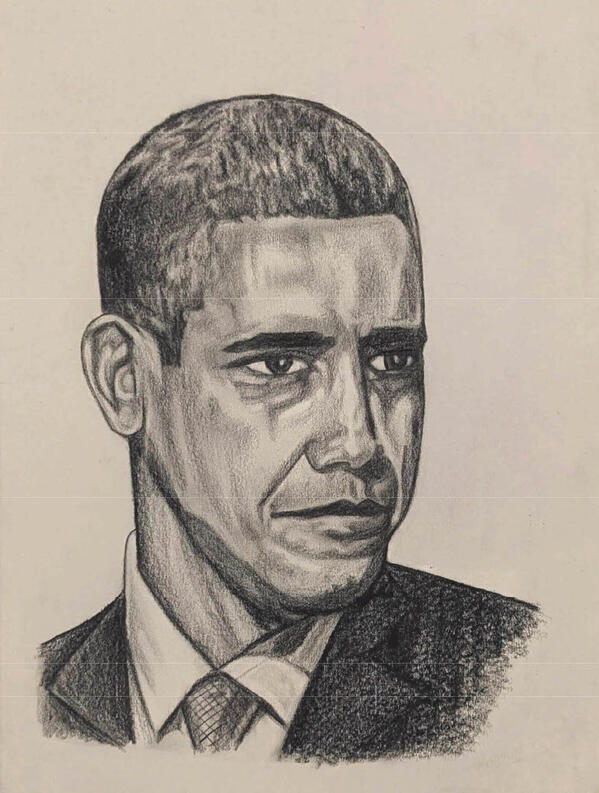
Untitled (Obama Portrait)
by Yuri Kadamov, Aquilla Barnette, and Lezmond Mitchell

#thedopestOBamaportraitever
by kidwifdacrayons (Marcus Pettiford)

Barack Hussein Obama
by Rodreguise Calhoun

Presidential Mugshot: Justice?
by Lucas Rash

The Last Smoke
by Sean Fox

Donald Trump: Red, White, and Blue
by Cortnee Eaglen

Mr. Trump and the First Step Act
by Brian Hindson

M.A.G.A.
by Kenneth Reams
The United States: Red, Black, Blue
by Cedar Annenkovna
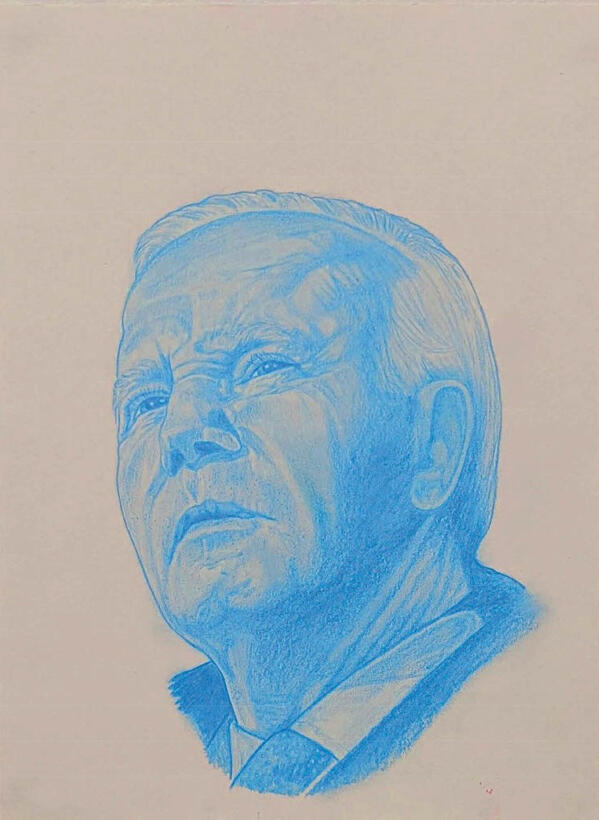
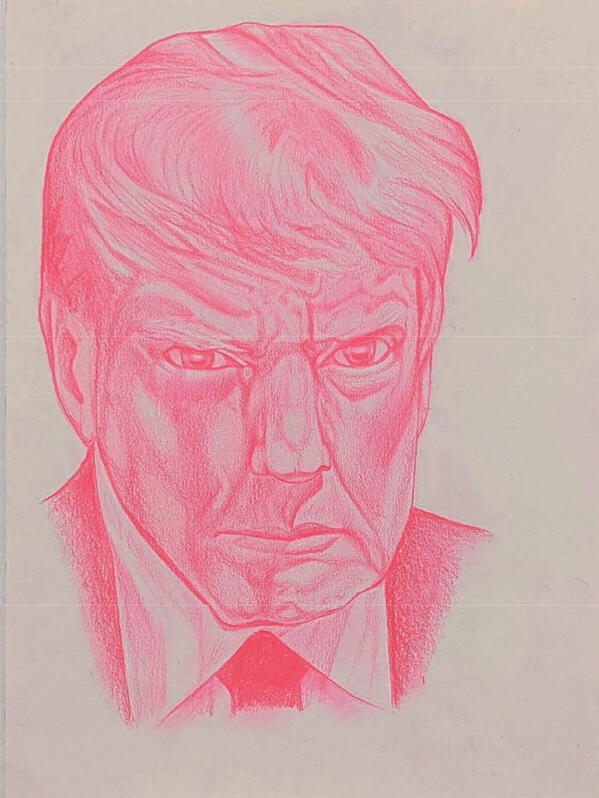
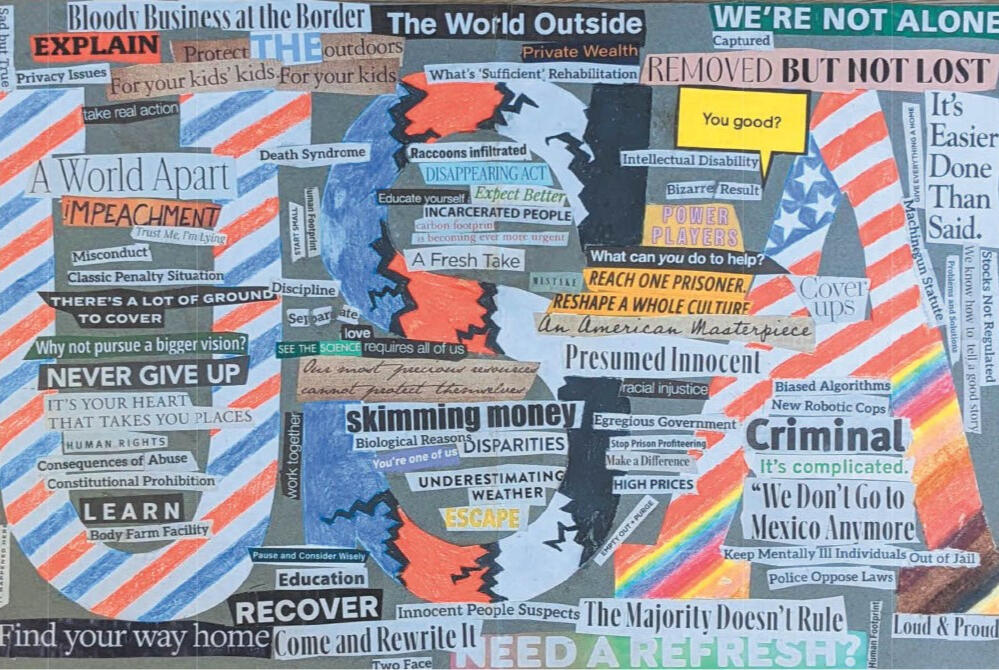


Vote for Me
by Nhut Vo

Lock the SOB's Up!
by J. Scott

Anyone Can Change
by Kirston Angell
The School to Prison Pipeline: A Profound Impact on People of Color
by Harry Ellis

Reaganology

Clintonology

Eleanor Roosevelt
by Cedar Annenkovna

3 Strikes, 2 Missed Opportunities, 1 Lost Soul
by Mike Tran

The War on Drugs (Richard M. Nixon)
by Sean White

Misguided: The Consequences of Bush
by Nhut Vo

Youth Struggles
by Larry Shoemaker

The United States of one Dollar
by Adam Young
Upcoming
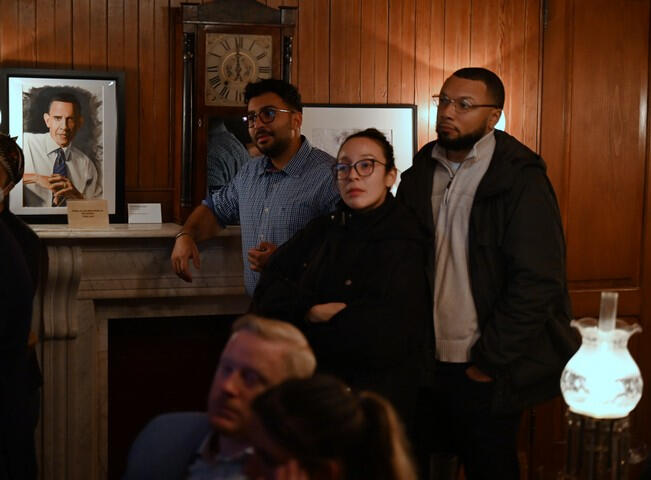
Exhibit Opening
Prison Reimagined: Independence 250
December 15, 2026
President Lincoln's Cottage
Details TBD
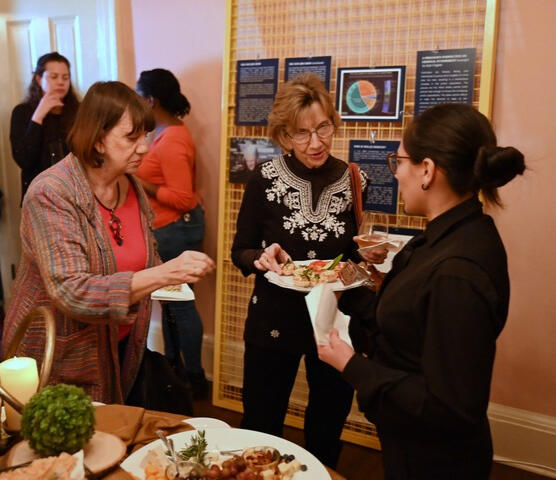
Opening Reception
Prison Reimagined: Independence 250
President Lincoln's Cottage
Details TBD
Past
Lincoln Ideas Forum
A Vision for America at 250: Voices from the Margins
Friday, April 10, 2026 | 10AM-12:30PM
President Lincoln's Cottage

Panel Discussion on Art and Justice
Saturday, September 20, 2025 | 1PM-3PM
Indy Art Center

What is Prison Reimagined: Independence 250?
Info Sheet and Call for Submissions:
Prison Reimagined: Independence 250 (PR250) is an exhibition based project that brings together the art and writing of incarcerated and formerly incarcerated people to commemorate the 250th anniversary of the signing of the Declaration of Independence and the founding of the United States of America. Our founding document was drafted with lofty aspirations. Some of these have been realized, while others are simply ideals we strive to achieve. In many cases we fight for these ideals, and often against the odds.The art and writing of PR250 will critique, appraise, and evaluate the Declaration. The works will ask and attempt to answer a simple question: how far have we come in our efforts to achieve equity and independence for all in the past 250 years?PR250 urges justice-impacted creatives to contemplate the American promise of independence. Submissions for this project will explore the history, successes, and disharmony of independence as it has intersected with other American traditions of slavery, emancipation, incarceration, and deportation. Collectively, these works will speak to the complicated nature of a foundation tradition rooted in equality, but yet to be achieved in practice. PR250 will invite the free world to hear our message and will urge them to reimagine the true meaning of
“life, liberty, and the pursuit of happiness” for all.*
Why center justice-impacted people?
From the onset, the scope of the Declaration was broad and inclusive on paper. In practice, however, it was narrow and distant for many. Today, those descended from and remaining in the marginalized communities who have fought for full inclusion in the promise of our grand experiment have a special voice and something important to say about our progress as a free and independent nation. It has always been those at the bottom—those who have struggle for the promise of liberty and equality—that continually bring us closer to the ideal. PR250 recognizes and broadcasts their voices.*
Where?
PR250 will premier at President Lincoln’s Cottage in Washington, D.C. in 2026 and will tour museums, historic houses, and community spaces in the United Sates throughout 2027. At each venue we will partner with local and national collaborators to bring informative, conversation-inspiring programs to viewers.*
How?
PR250 will be juried and curated by the Committee of Incarcerated Artists and Writers (CIAW), a group of incarcerated people who have used their time behind bars to transform their lives through education, art, compassion, and writing. The CIAW will selected 76 original works—38 visual and 38 written works—to become a permanent part of the PR250 tour exhibition. The CIAW will curated the exhibition to display a visual narrative on justice, equality, and related struggles in the United States.
PR:250
Artist & Writers | Call for Submissions
Prison Reimagined: 250 (PR250) is a juried exhibition. A total of 76 works (38 visual
artworks and 38 written works) will be selected by the Committee of Incarcerated Artists and Writers (CIAW). The jury process will be blind (meaning the CIAW will not receive any personally identifying information regarding submissions). Up to 16 works will be selected from formerly incarcerated individuals; the remaining works will be selected from currently incarcerated individuals. Creators of top submissions will receive an honorarium.*
Criteria
Work will be selected based on the following criteria:1. Conceptual clarity and engagement of the theme
2. Creativity and originality
3. Emotional impact and ability to provoke thought
4. Artistic excellence and craftmanship of art
and/or writing*
You will be notified if your work is:
A) Selected for the physical exhibition
B) Selected for the digital exhibition
C) Not selectedIf your work is selected you will be sent a consent form, provided by Prison Reimagined.
Submission Guidelines
Artists
Artwork for PR250 should be a product of uncensored expression, brave imagination, and historical context. Any medium and size will be considered. Diptychs, triptychs, and multipaneled works will be considered. Your work can make a political statement. Artists can look to inspiration from the [Talking and Drawing Points] (#section-pr2503) Artists are encouraged to submit a brief explanatory statement to accompany their work.*** All artwork MUST include a TITLE, YEAR, and MEDIUM used. Pricing your artwork is OPTIONAL ****
Writers
Poetry and prose (creative writing, nonfiction, and personal narrative) submissions will be considered. Poetry and creative writing should speak to the PR250 cause and
purpose. Essay and nonfiction writers should make an argument for a new vision of Life, Liberty, and the Pursuit of Happiness. The goal is to challenge the reader. Build your argument with supporting facts. Personal narratives should tell a story about your life. Your narrative should reveal insight to the reader that relates to your involvement with the justice system and your journey in pursuit of the American dream.
How to Submit Works
SUBMIT ORIGINAL WORK TO:
PR250/Janie Ritter, P.O. Box 190, Broad Run, VA 20137Please write to the above address with any questions or comments. Deadline to submit work is May 31, 2026.Limit of 2 entries (2 visual art AND/OR 2 written work) per person.
Talking and Drawing Points
Talking and Drawing Points are cues to give you creative ideas.
These are simply suggestive prompts – your submission can
be a direct response to one of these points or can be based on
something entirely different. Think outside the box and make a
statement with your work!
• Independence as it
intersects with
incarceration/enslavement• Independence as it
intersects with emancipation
• Independence as it
intersects with free labor• The promise of the
Declaration in equal
measure for all• Women and the fight for
equality & independence• Reconcile independence
with America’s caste system• Independence and
deportation
• Independence and poverty• Independence to you,
personally• Fourth of July behind bars• A time when you felt the
promise of the Declaration
of Independence• LGBTQ and independence• The 250-year evolution of
independence in practice• Independence along the
lines of race and class in
America• Independence 160 years
after emancipation
PRESS RELEASE:
Prison Reimagined: Presidential Portrait Project, and the Committee of Incarcerated Artists
and Writers Wins 2024 AASLH Award of Excellence
NASHVILLE, TN—June 2025—The American Association for State and Local History
(AASLH) proudly announces that the Committee of Incarcerated Artists and Writers is the
recipient of an Award of Excellence for Prison Reimagined: Presidential Portrait Project. The AASLH Leadership in History Awards, now in its 80th year, is the most prestigious recognition
for achievement in the preservation and interpretation of state and local history. "Prison Reimagined: Presidential Portrait Project" (PRP3) comprises 46 portraits and essays by incarcerated creators. Each portrait explores a different president’s record on incarceration, with added context, first-person reflections, and writings. PRP3 is the first of its kind, conceived of and curated entirely by a team of incarcerated individuals - the Committee of Incarcerated Artists and Writers (CIAW), with support from Justice Arts Coalition (JAC), President Lincoln’s Cottage (the Cottage), and the Art for Justice Fund. PRP3 was first on view at the Cottage January 5th-February 19th, 2024, at Workhouse Arts Center (WAC) January 18th-March 12th, 2025, at Wistariahust Museum from April 15th-June 30th, and the Indy Art Center from Early August-October, 2025.This year, AASLH confers 54 national awards honoring people, projects, exhibits, and publications. The winners represent the best in the field and provide leadership for the future of state and local history. The AASLH awards program was initiated in 1945 to establish and encourage standards of excellence in the collection, preservation, and interpretation of state and local history throughout the United States. The AASLH Leadership in History Awards not only honor significant achievement in the field of state and local history, but also bring public recognition of the opportunities for small and large organizations, institutions, and programs to make contributions in this arena. For more information about the Leadership in History Awards, contact AASLH at 615-320-3203 or go to www.aaslh.org.**President Lincoln’s Cottage is a historic site and museum situated on a beautiful campus
in Northwest Washington, D.C. Opened to the public in 2008, the site brings President Lincoln’s
nation-changing story to life through innovative guided tours, engaging exhibits, and interactive programs. Learn more about our history, mission, and impact.The American Association for State and Local History is a not-for-profit professional organization of individuals and institutions working to preserve and promote history. From its headquarters in Nashville, Tennessee, AASLH provides leadership, service, and support for its members who preserve and interpret state and local history in order to make the past more meaningful to all people. AASLH publishes books, technical publications, a quarterly magazine, and maintains numerous affinity communities and committees serving a broad range of constituents across the historical community. The association also sponsors an annual meeting, regional and national training in-person workshops, and online training